
Comparing NVMe, SSD, and HDD Servers: The Ultimate Guide to Choosing Storage
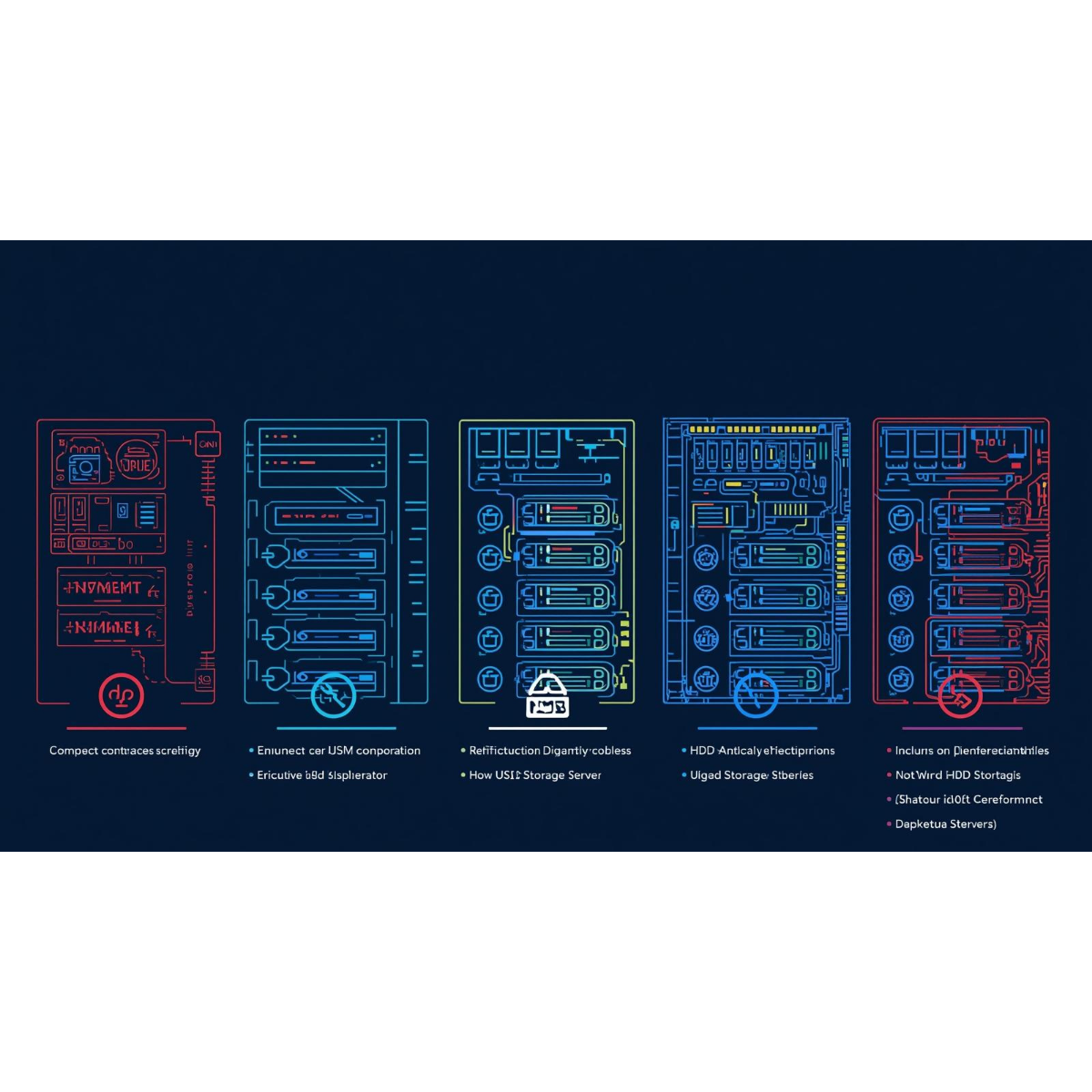
When it comes to server performance, storage plays one of the most critical roles. Whether you're running a business website, managing cloud applications, hosting databases, or building development environments, the type of storage you choose can significantly impact your speed, reliability, and overall user experience. NVMe, SSD, and HDD are the three most common server storage options, each offering unique advantages and limitations. Understanding how they differ—and knowing which one fits your workload—is essential for making the right decision.
Understanding HDD Storage (Hard Disk Drive)
HDDs are the oldest and most traditional form of computer and server storage. They use spinning magnetic disks and mechanical arms to read and write data. Because of this mechanical design, HDDs are slower and more prone to physical wear, but they are also the most affordable option.
HDDs are suitable for storing large volumes of data at a low cost. If your server workload is not heavily dependent on speed—such as backups, archives, or cold storage—HDDs work perfectly. However, when dealing with applications requiring fast read/write speeds, HDDs can become a bottleneck.
Despite their limitations, HDDs offer excellent capacity at minimal cost, making them a budget-friendly choice for non-critical or bulk storage needs.
Understanding SSD Storage (Solid State Drive)
SSD storage is significantly faster than HDDs because it uses flash memory instead of mechanical parts. Without moving components, SSDs offer better durability, lower latency, and smoother performance.
SSD servers are ideal for websites, CMS platforms, moderate databases, and businesses seeking reliable and responsive hosting. They are much faster than HDDs but still limited compared to NVMe drives due to using the SATA interface, which caps their performance.
SSDs provide a perfect balance between cost and speed, making them the preferred option for most mid-level hosting environments.
Understanding NVMe Storage (Non-Volatile Memory Express)
NVMe storage is the newest and fastest type available. Built to work directly with the PCIe interface, NVMe offers dramatically higher speeds and lower latency compared to SATA SSDs. This makes NVMe servers ideal for heavy workloads, such as large databases, high-traffic applications, AI tools, gaming servers, and enterprise-grade systems.
NVMe drives can handle significantly more data per second and process multiple data streams at once. Because of this performance advantage, NVMe hosting delivers exceptionally fast load times, improved I/O operations, and greater efficiency under pressure. Although it costs more than SSDs and HDDs, the performance gain is tremendous.
If your applications need top-tier speed and consistent uptime, NVMe servers are the best choice.
Performance Comparison: NVMe vs SSD vs HDD
When measuring server performance, several key factors matter: speed, latency, durability, power consumption, and cost.
Speed:
- HDD: 80–160 MB/s
- SSD (SATA): 400–600 MB/s
- NVMe (PCIe): 2,500–7,000+ MB/s
Latency:
- HDD: Slowest
- SSD: Medium
- NVMe: Fastest, near-instant
Durability:
- HDD: Mechanical wear
- SSD: Strong durability
- NVMe: Highest endurance for demanding workloads
Best For:
- HDD: Large capacity, backups
- SSD: Websites, apps, general hosting
- NVMe: Enterprise workloads, high performance apps
Which Storage Should You Choose?
The right storage depends entirely on your needs:
Choose HDD if:
- You need cheap, high-capacity storage
- You store backups or archived data
- Speed is not a priority
Choose SSD if:
- You want fast, reliable everyday server performance
- You host websites, blogs, small apps, or small databases
- You want a balance between cost and performance
Choose NVMe if:
- Speed, responsiveness, and stability matter
- You manage large-scale applications or high-traffic databases
- You want future-proof, enterprise-grade hosting
Why NVMe Is Becoming the New Standard
As modern applications demand more power, NVMe is quickly becoming the preferred option for high-performance servers. Businesses rely on fast data processing, minimal latency, and efficient multitasking. NVMe storage fills this need perfectly.
Whether it’s an eCommerce system handling thousands of transactions or a developer hosting resource-heavy applications, NVMe ensures the server remains fast, responsive, and reliable under stress.
Final Thoughts
NVMe, SSD, and HDD each offer unique benefits, making no single option the “best” across all use cases. Instead, the right choice depends on your performance requirements, budget, and long-term goals.
- Use HDD for large, low-cost data storage
- Use SSD for general hosting and reliable performance
- Use NVMe for top-tier speed and professional workloads
By understanding these differences, you can confidently select the best storage type and ensure your server delivers the performance your projects deserve.